The New York City Marathon ran last Sunday, not long after the Milwaukee Brewers won the World Series. By Tuesday, two of the sharpest writers on performance had each pulled a lesson from those days, and on first read they point in opposite directions.
Brad Stulberg says stop holding back. Care more, out loud, even if it makes you look foolish. Steve Magness says caring too hard can be the thing that chokes you, and the people who last are the ones who keep it loose. Both write about excellence for a living. Both are, as far as we can tell, right.
That tension matters more in the second half of life than in the first. Midlife men tend to fall into one of two ditches. Some cared so hard for so long that the caring ate them, and they’d like to stop. Others quietly stopped caring years ago and called it maturity. This week, four voices in the Trailhead Library offered a way between the two.
The Case Against Playing It Cool
In “Enough with the Nonchalance; Caring Is Cool,” posted November 3 to expand on a line he shared after the Brewers won, Stulberg goes after a posture most of us know well. Acting unbothered. Keeping one foot out the door. Treating effort as slightly embarrassing. He calls it what it is: “Nonchalance is a cop-out.”
His argument is that detachment is a trade. You get short-term comfort and protection from looking like you tried and failed. You give up growth, mastery, fulfillment, and connection. He points out that the people we admire in any field, athletes, teachers, doctors, artists, parents, are almost never indifferent. They care visibly, and they accept the vulnerability that comes with it. He also reminds readers of something easy to forget at 50: you don’t get unlimited chances.
For a lot of men, that lands hard. Cool detachment is often how we got through the middle years. It’s how you survive a reorganization or a marriage that’s gone flat. It feels like wisdom. Stulberg’s point is that sometimes it’s just fear in a nicer jacket.
The Case for a Second Anchor
Magness, writing a day earlier, comes at it from the other side, by way of the marathon. In “There’s More Than One Way to the Top,” posted November 2, he tells three stories that cut against the idea that greatness requires being obsessive and all-in.
The first is Jess McClain. She was a seven-time All-American at Stanford and turned pro, then walked away from professional running around 2020 because the push for podiums at all costs had drained the joy out of it. She didn’t race for roughly two years. When she came back, she kept a full-time job at a nonprofit. On Sunday she finished second in New York, the first American on that podium since 2018.
The second is Andreas Almgren, a former 800-meter runner whose career was interrupted by years of stress fractures. He changed how he trained, moved up in distance slowly, and won New York in his marathon debut. The third is age. Magness notes that Edna Kiplagat finished fourth at 46, and that Roberta Groner, whom he coached, qualified for the Olympic Trials at 48.
His practical point is the one worth keeping. Build a second anchor, a job, a family, a life outside the pursuit, so a bad day isn’t a verdict on your whole self. That freedom is what lets you take real risks. His summary: “Care deeply, but don’t let it steal your joy.”
Here’s the useful part. Magness isn’t arguing for nonchalance. McClain didn’t stop caring about running. She stopped letting running be the only thing holding her up. Read next to Stulberg, the disagreement shrinks. One is warning against caring too little. The other is warning against caring with nothing else underneath you.
One Thing, Fully, for a Year
If you want a practice that holds both ideas at once, Michael Easter found one. On November 3, his Two Percent newsletter ran “Go All In On One Hobby a Year,” an interview with Ravi Gupta, author of The Invisible List.
Gupta spent about six years running schools for kids in poverty in the Deep South. The work succeeded, and he burned out. At a friend’s wedding he noticed he’d started and quit salsa dancing several times, and he built a system so that wouldn’t keep happening. Now 43, he treats each year like a school year with himself as the only student, and gives each year one major passion. So far that’s included powerlifting, screenwriting, surfing, tennis, a novel, the MCAT, Italian cooking, and pizza school in Naples.
The method starts with what he calls the invisible list: the things you’ve always wanted to do and keep not doing. He suggests writing it by hand, away from your phone, in about an hour. The prompts are simple. What did you love as a kid? When did you feel most alive? What makes you think, I wish I could do that? Then pick one, set a measurable goal, plan it month by month, and let yourself be bad at it in public early. In his words, “You have to suck in order to be good.”
Notice what this does. It’s Stulberg’s full commitment, aimed at one thing. It’s also Magness’s second anchor, because the passion sits beside your work and family instead of replacing them, and because the year ends. You care completely, and you hold it loosely enough to set it down in December.
The week’s hardest version of this came from Rich Roll’s conversation with the ski mountaineer Jim Morrison, posted November 2. Morrison lost his wife and two young children in a 2011 plane crash. In 2022 his partner, Hilaree Nelson, died in an avalanche on Manaslu. Last year he skied the North Face of Everest, the line the two of them had planned together. The episode page frames his grief this way: “It’s not about learning to live without the people we lose.” The idea is to carry them with you. That’s caring with nothing held back, and a grip loose enough that it doesn’t crush the person holding on.
What the Grip Is For
Read side by side, these four are saying something none of them says alone. Caring hard is the price of a full life, and you don’t get to skip paying it. But the grip that lets you keep paying it is a loose one. You need something underneath you besides the thing you care about. You need permission to be a beginner. And you need seasons, so a pursuit can be everything for a while without becoming everything forever.
That fits the second half of life better than either half of the argument on its own. Plenty of people in midlife aren’t short on caring. They poured it into one place for 25 years, the company or the practice or the title, and that one place is now loosening its hold on them. The instinct is either to grip harder or to let go of caring altogether. Neither works. The better move is to spread the weight. Care about more things, more openly, and hold each of them a little more lightly.
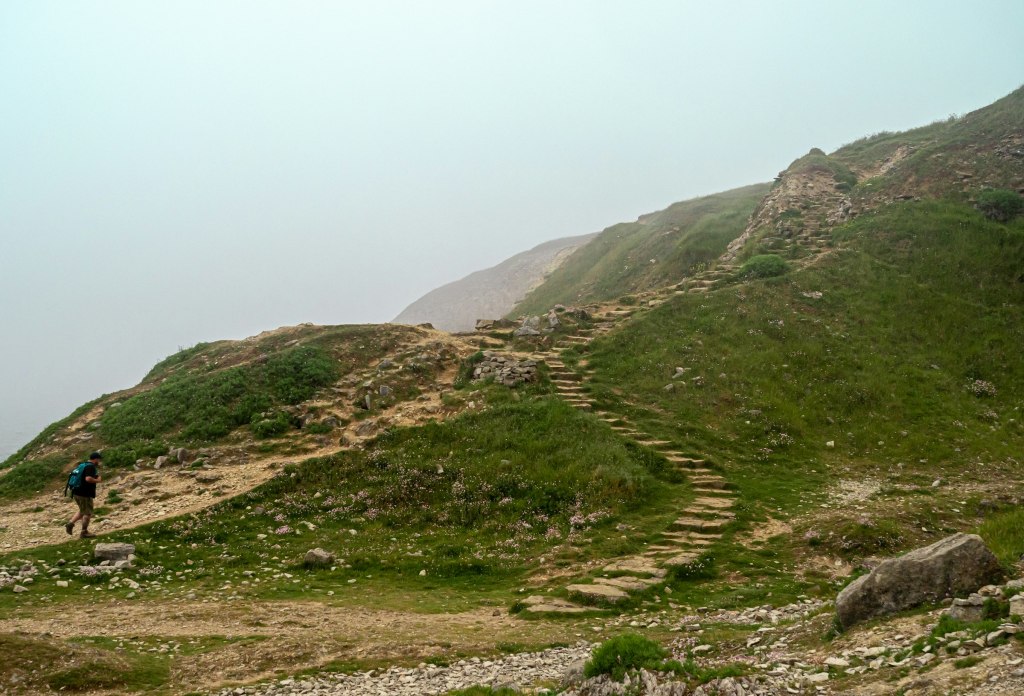
It’s also why wilderness helps. On a river or a trail, you care intensely about small, real things: a dry tent, the next portage, the person next to you who’s struggling up a hill. And none of it is your identity. The trip ends. You come home lighter, having practiced caring hard about something you can’t control and can’t keep.
That’s what Trailhead tries to make room for. The expeditions are a place to be a beginner again, with people willing to be beginners alongside you. The community gathers from time to time to keep those threads alive, and the journal carries the conversation between trips. Maybe this is the year to pull out your own invisible list. Pick one thing. Care about it out loud. And hold it loosely enough to keep the joy.
How this was made: Trailhead keeps a running library of the thinkers who shape our work, and each week an AI reads across what they’ve published and drafts a synthesis like this one. The ideas belong to their authors and are credited and linked above; the pattern-finding is the machine’s, and the library is curated by Scott Levine.
Photo by Ákos Nemes on Unsplash.
The Trailhead Letter brings each new journal entry to your inbox. Nothing said in a Trailhead circle, and nothing for sale.