I want you to picture something.
It’s a Tuesday morning in July. I’m standing in a cabin in northern Wisconsin. There are four bunk beds, a wood floor that hasn’t been level since the Eisenhower administration, and a ten-year-old kid who is convinced that the spider on his sleeping bag is going to kill him.
I am fifty-five years old. I am the managing partner of a national law firm. And I am a summer camp counselor.
Not for a weekend. For a month.
My son is a camper down the row of cabins. My daughter is at the girls’ camp down the road. My wife gets an empty house for a month every summer, which she has made very clear is her favorite part of this arrangement. And for thirty days, nobody in my family looks at a screen. Not one complaint.
Everyone in my life thought I’d lost my mind. My partners. My clients. My forum. And honestly? Going back to my childhood camp as a counselor was the sanest thing I’d done in years.
What I think happened
I spent twenty years building a law firm. From nothing to a national firm with more than forty attorneys. And I loved every minute of the climb. The early years, the hustle, the scaling, the wins. My identity and my business became the same thing. I was the founder. I was the managing partner. That was the answer to every question about who I was.
But somewhere in my early fifties, something shifted. The engine was still running. The firm was growing. On paper, everything looked right. But there was a gap between the life I’d built and how it actually felt to live it. Not a crisis. Nothing dramatic. Just a quiet distance between what I was doing and what I actually wanted.
I didn’t have a word for it yet. I just knew that “more” had stopped being an answer and had become a habit.
If you’ve built something and you’re somewhere past fifty, I’m guessing you recognize this. Most of us don’t talk about it. We’re too busy being impressive.
Nobody cared what I did for a living
I went back to Camp Highlands because my son was going. That was the excuse. The truth is I’d been thinking about it for years. This place had shaped me as a kid in ways I didn’t fully understand until I was deep into adulthood. I wanted to see if it was still there, whatever “it” was.
So I signed up as a counselor. And on day one, something happened that I did not expect.
Nobody cared what I did for a living.
I wasn’t the managing partner. I wasn’t the past president of anything. I wasn’t the guy who’d built the thing. I was the guy in the cabin. The guy who needed to figure out how to get eight ten-year-olds to the dining hall on time and convince a homesick kid that tomorrow would be better.
My phone was off. My calendar didn’t exist. My title was irrelevant. And for the first time in as long as I could remember, I had to sit with who I actually was when I wasn’t performing success.
That’s uncomfortable. I want to be honest about that. The first few days, I reached for my phone like a phantom limb. I woke up anxious about emails that weren’t coming. My body was at camp. My nervous system was still in the office.
And then it broke.
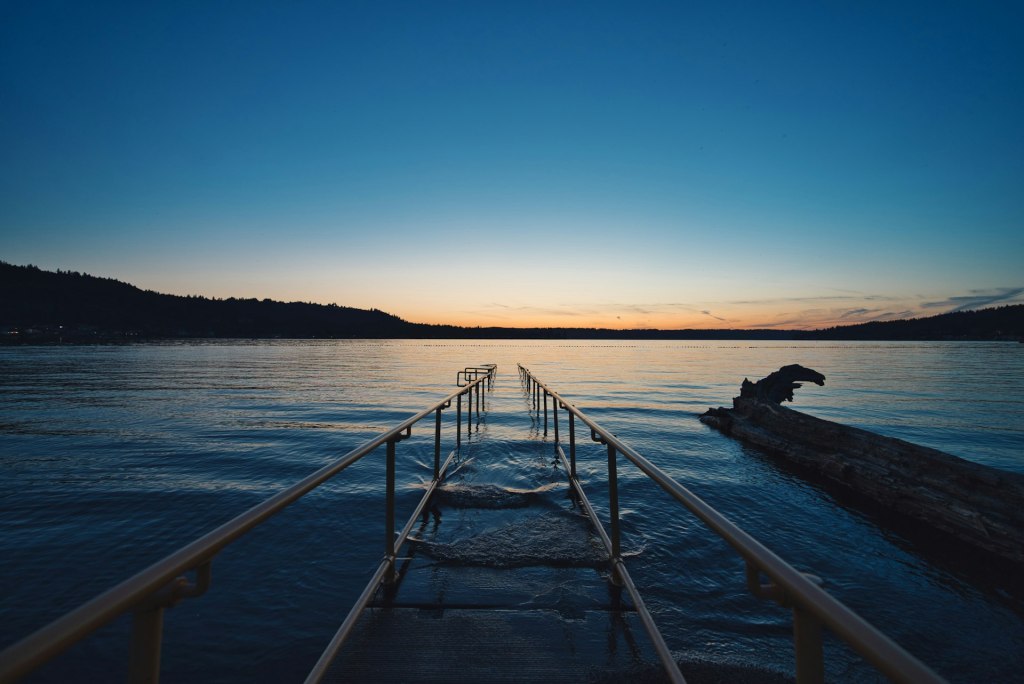
I don’t know what day it was. I just remember sitting on a dock at dusk, watching the sun drop behind a line of pines, and realizing I hadn’t thought about my inbox in two days. I was just there. Present. The water was still. The kids were laughing somewhere behind me. And something inside me unclenched that I didn’t even know was tight.
A friend of mine wrote a screenplay set at this camp a hundred years ago. One of his characters says something I haven’t been able to shake: “It is the reality of camp. Emotions are stronger here.”
That’s what I found. Not an escape from real life. A return to something more honest than the life I’d built around titles and schedules and metrics. The wilderness doesn’t care about your revenue. And when you strip all of that away, you find out pretty fast what’s actually holding you up, and what’s been weighing you down.
I went back the next summer. And the one after that. Not because it was a vacation. Because it was the realest thing in my life.
The second mountain
David Brooks writes about two mountains. The first mountain is the one we all know. It’s achievement. It’s building. It’s the climb we signed up for when we started our companies and pushed ourselves to grow. And it matters. I’m not here to tell you it doesn’t.
But there’s a second mountain. The second mountain is about meaning. It’s about connection. It’s about asking harder questions than “How do I grow the business?” It’s asking: Who am I without the business? What do my relationships actually look like when I’m paying attention? What am I building this for?
Here’s what I want to be clear about: I’m not done climbing the first mountain. I’m still scaling my firm. I’m still in it. This isn’t a retirement essay. It’s not a story about how I left it all behind to find myself on a mountaintop.
It’s about holding both. The tension of still building while also doing the deeper work. I think that tension is where most of us actually live. We just don’t talk about it.
The entrepreneurs I know who are thriving in their fifties and sixties aren’t the ones who kept grinding without asking why. They’re the ones who gave themselves permission to question everything. To have an honest conversation with a small group of people who weren’t going to let them perform. To step into discomfort and sit with it.
That’s why I started Trailhead. It’s built around wilderness experiences, peer forums, and the kind of honest conversations most of us aren’t having. I started it because I needed it. Not because I had it figured out. Because I didn’t. And I’d spent enough time around entrepreneurs to know I wasn’t the only one.
Your version of the cabin
Here’s what I’ll leave you with.
Every one of you has a version of that cabin.
Maybe it’s not a summer camp. Maybe it’s a conversation you’ve been avoiding. A trip you keep pushing to next year. A relationship that needs your actual presence, not just your calendar invite. A version of yourself you haven’t made room for because the current version is too busy being impressive.
We are trained to perform. We are trained to optimize. We are trained to say yes to more. And the single hardest thing for a person like us to do is to stop and ask: What would I do if I gave myself permission?
That permission isn’t coming from your partner. It’s not coming from your board. It’s not coming from your forum. It’s definitely not coming from your inbox.
You have to give it to yourself.
I went back to my childhood summer camp in my fifties. For a month. Screen-free. Title-free. And the best thing that’s happened to me in the last three years wasn’t a deal or a hire or a revenue milestone. It was sitting around a fire with a handful of people who were willing to tell the truth.
That’s it. That’s the whole essay.
Now: what are you giving yourself permission to do?
The Trailhead Letter brings each new journal entry to your inbox. Nothing said in a Trailhead circle, and nothing for sale.


Leave a Reply