There’s a Franciscan friar in New Mexico who has explained my fifties to me better than anyone I’ve paid by the hour.
Richard Rohr’s book Falling Upward is built on a deceptively simple map. Life has two halves, and they have different jobs. The first half is for building the container: the identity, the career, the family, the reputation, the answers. It’s necessary work and Rohr never disparages it. You cannot transcend an ego you never built. The second half is for discovering what the container was for, which turns out to be a different question entirely, with the inconvenient property that none of the first-half tools can answer it.
And here’s the hinge of the whole book, the part that made me put it down and stare out a window: you don’t graduate from the first half to the second. You fall.
Something stops working. A success that doesn’t satisfy. A loss that doesn’t resolve. A quiet distance that won’t close no matter what you build across it. Rohr calls it necessary suffering, and he means the word necessary literally. The fall isn’t the interruption of the journey. The fall is the vehicle. Nobody thinks their way into the second half of life. They’re carried there, usually against their will, by something the first-half self experiences as failure.
Which raises an obvious question for people like us, who have arranged our entire lives to prevent failure. What happens if you never fall?
Rohr’s answer is blunt. You stay in the first half forever. The world is full of seventy-year-olds still decorating the container, still keeping score, still winning a game that stopped mattering decades ago. First-half success is so rewarding, and our culture so worships it, that falling upward has to be almost smuggled past your own defenses.
This year I tried something different. I tried falling on purpose.
Order, disorder, reorder
Rohr has a second map that explains the mechanics, and once you see it you see it everywhere. Every real transformation, he says, moves through three stages: order, disorder, reorder.
Order is the world making sense. The plan works, the identity fits, effort converts to results at a known exchange rate. Most of us lived there for decades, and it was good.
Disorder is when the exchange rate breaks. The old moves stop producing the old meaning. This is the stage our instincts are worst at, because every instinct says to fight back toward order: work harder, set a bigger goal, renovate the kitchen, renovate the wife’s opinion of the kitchen. Rohr’s claim, and it’s the hardest teaching in the book, is that disorder can’t be skipped, only delayed, and that everything depends on how you behave while you’re in it. Resist it and it curdles into bitterness. Stay in it honestly and it becomes a doorway.
Reorder is what’s on the other side, and it’s not a return to the old order with better numbers. It’s a larger way of holding everything, where the first-half achievements still matter but are no longer load-bearing, where you can finally want things without needing them. You can’t describe reorder accurately from inside order. I’m not going to pretend I live there. I’ve had afternoons there. They were enough to reorganize my priorities.
Parker Palmer, coming from the Quaker tradition, adds the instruction manual for the disorder stage: before you tell your life what you intend to do with it, listen for what it intends to do with you. Vocation, he says, isn’t a goal you set. It’s a voice you finally stop drowning out. The first half of life is loud on purpose. The listening requires somewhere quiet, which is not a metaphor. It requires an actual quiet place and actual unscheduled time, two things I had systematically eliminated from my life, as perhaps you have from yours.
A year of practicing the fall
Here’s what falling on purpose looked like for me, concretely, over the past eighteen months, offered not as a template but as evidence that this isn’t theory.
I went back to my childhood summer camp as a counselor, in my fifties, for a month at a time. Order would call that career malpractice. It was the beginning of everything.
I stood on a stage in May and told a few hundred peers about the quiet distance in the middle of a successful life, out loud, with my name on it. The container I’d built would never have permitted that sentence.
And in August, seventeen of us went north and spent five days in the woods asking each other first-half-proof questions. What am I becoming. What have I been carrying. What am I choosing not to see. I’ve written in these pages about what the place did to us. What I haven’t said plainly until now is what the whole year has been: a deliberate apprenticeship in disorder. Small voluntary falls, taken in good company, before life assigns an involuntary one.
Because that’s the actuarial truth this essay has been circling. The fall is coming either way. The body, the market, the people we love, time itself: something will eventually break the order for every one of us. The only question is whether we meet that moment with any practice, any language, any witnesses. A man whose entire identity is the container doesn’t survive the container cracking. A man who has rehearsed, who has learned in small doses that he is something other than his achievements, bends instead of shattering.
That is the entire theory of Trailhead, stated as plainly as I know how. Not adventure travel. Not networking with lakes. Rehearsal. Supervised, voluntary, honest rehearsal for the second half of life, taken with people who won’t let you perform your way out of it.
The season ahead
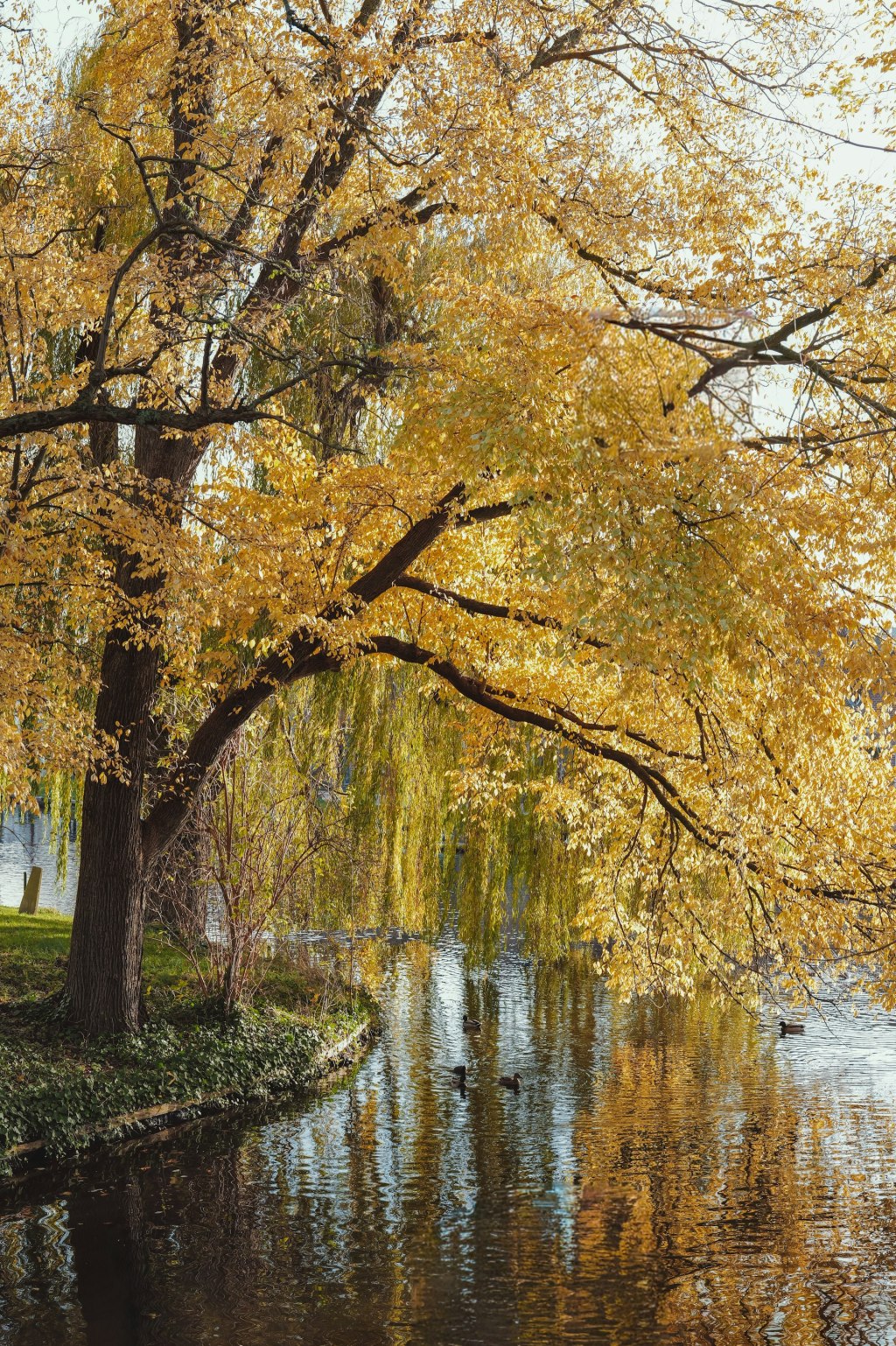
It’s October in Missouri as I write this. The year is doing its own falling, which is the kind of metaphor I’d delete if it weren’t literally outside the window.
Here’s where this experiment stands, one year in. The nonprofit is real now, papers filed, board seated. The forums that grew out of August are meeting. There are more expeditions taking shape: the Northwoods again, smaller trips closer to home, and something farther away that I’ll write about when it’s ready. A program for young people is being designed, led in meaningful part by a high school student who has spent more summers in these woods than I have, on the theory that the second half of life goes better if someone shows you the trailhead in the first.
But the honest status report is smaller than any of that. I am a first-half man practicing second-half work, falling slowly, with help. Some weeks the container wins. The inbox is undefeated some weeks.
And then I remember a dock at dusk, and a circle of people telling the truth, and I remember that the point was never to win the second half. Winning is a first-half word.
The point is to stop climbing long enough to notice you’ve been carried somewhere new.
If any of this is your weather too, the invitation stands. Subscribe to the Letter below and you’ll hear when the next group heads for the trees. Bring your container.
We’ll find out together what it was for.
The Trailhead Letter brings each new journal entry to your inbox. Nothing said in a Trailhead circle, and nothing for sale.


Leave a Reply